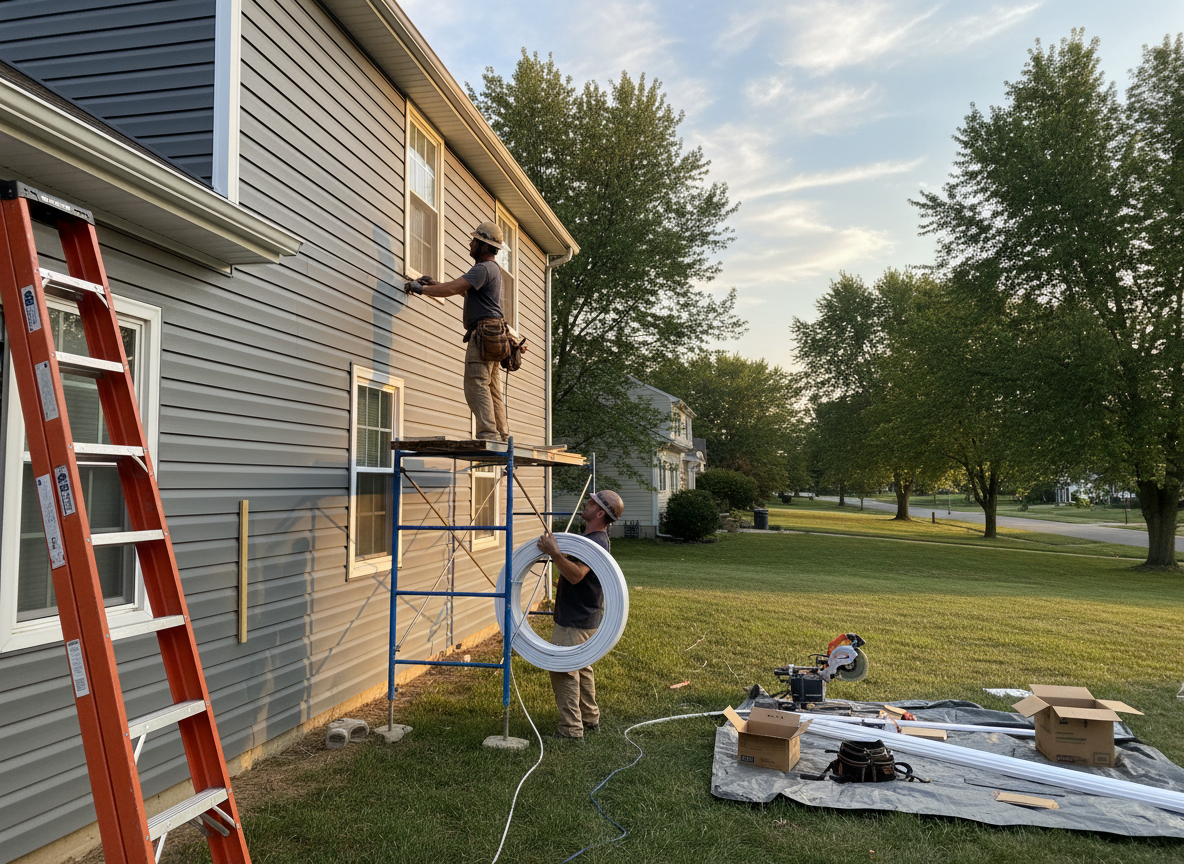
Anderson Township homes, many built between the 1960s and 1980s along Beechmont Avenue and surrounding streets in Hamilton County, often show vinyl siding wear from repeated freeze-thaw cycles and heavy summer humidity. Proper installation requires accounting for the expansion and contraction that occurs when temperatures swing from below freezing in winter to humid highs in July. Crews at Spark Patch measure and cut panels to allow correct gapping at every joint, preventing buckling that commonly appears on south-facing walls exposed to afternoon sun.
Soil conditions around Anderson Township include clay-heavy ground that holds moisture after spring rains, which can lead to water intrusion at the base of siding if weep holes and starter strips are not installed correctly. Vinyl siding contractors here routinely check foundation lines and grade slopes before starting, especially on properties near the Little Miami River where runoff increases. Skipping these steps results in rot behind the new panels within two seasons.
Local building practices in the Cincinnati metro area require that vinyl siding meet specific wind-load ratings for the region. Spark Patch crews verify nailing patterns and house-wrap integrity on every job, particularly on two-story homes in neighborhoods like Forest Hills and Mount Washington where wind exposure is higher. Homeowners notice the difference when panels stay tight after the first strong thunderstorm of the year.
Technician insight
In Anderson Township the thing that catches most people out with vinyl siding contractors is underestimating how much the clay soil and steep lots along Beechmont Ave push water against the foundation. If the starter strip sits too low or the weep holes get blocked during install, moisture wicks up behind the new panels within the first winter.
Siding Buckling on South Wall
Panels on a 1970s ranch in Anderson Township had started to wave after a hot summer. We found the original installer left no expansion gap at the top trim. We removed the affected course, added proper clearance, and reinstalled matching vinyl so the wall now moves freely with temperature changes.
How it works
- 1
Site Assessment
Measure all elevations, note existing insulation, and inspect for moisture damage around windows and doors.
- 2
Material Selection
Choose vinyl profiles and colors suited to Anderson Township sun exposure and temperature swings.
- 3
Preparation
Remove old siding, repair sheathing, and install new house wrap with proper flashing details.
- 4
Installation
Hang panels with correct expansion gaps and secure trim pieces at all corners and openings.
- 5
Final Walkthrough
Review every elevation with the homeowner and confirm drainage paths remain clear.
Pricing
Upfront quotes after on-site inspection; final price depends on home size, stories, and existing damage found.