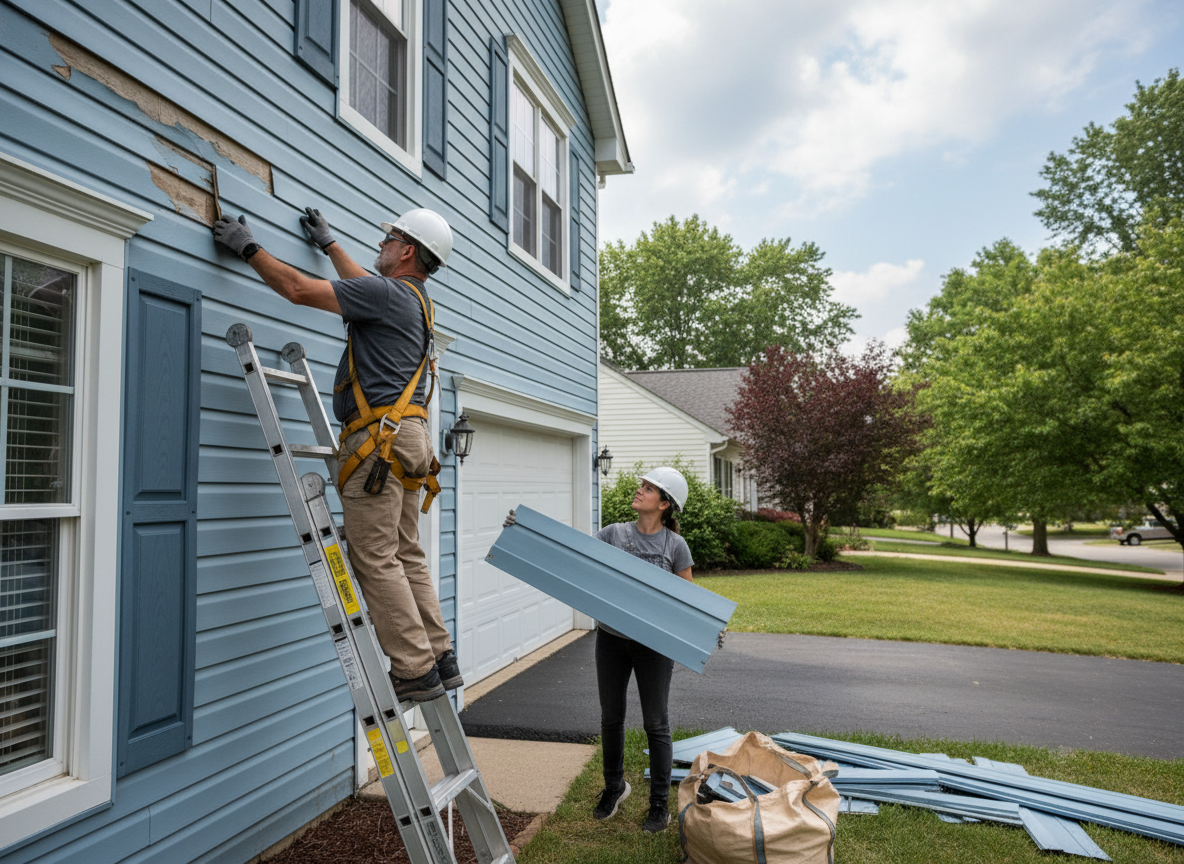
Anderson Township homes, many built in the 1960s through 1980s in Hamilton County, often feature aluminum or early vinyl siding that takes repeated hits from Cincinnati's freeze-thaw cycles and heavy spring rains. Water works behind panels along seams and around window trim, leading to sheathing rot that spreads faster on slopes facing prevailing winds off the Ohio River valley. Spark Patch crews start every job by pulling back sections to check for hidden moisture rather than patching visible dents only.
Repair work here differs from new installation because matching faded colors on 30-year-old stock requires sourcing discontinued profiles or blending paint on site. Edge cases include properties near Beechmont Ave where road salt spray accelerates corrosion on lower courses and homes on steeper lots where poor drainage channels runoff directly against foundation siding. Technicians carry replacement pieces for common Andersen Township profiles and document any code notes on weep holes or housewrap integration before closing up walls.
Homeowners sometimes attempt DIY caulk fixes after summer storms, but those trap moisture and force larger replacements later. Proper repair involves removing affected runs, inspecting fasteners and felt paper, then reinstalling with updated flashing details that handle the region's humidity swings. This approach keeps the original siding intact longer instead of triggering a full replacement on otherwise sound sections.
Technician insight
In Anderson Township, the thing that catches most people out with siding repair contractors is the hidden rot behind 1970s aluminum on north-facing walls near the Little Miami corridor. Freeze-thaw plus river humidity pushes moisture up under the panels faster than homeowners expect, and a quick caulk job only makes it worse.
Siding Repair After Heavy Spring Rains
A homeowner on a sloped lot off Beechmont Ave noticed buckling along the lower course after weeks of rain. Removal revealed saturated OSB and failed felt paper where runoff pooled against the foundation. The crew replaced the sheathing section, added new flashing, and reinstalled matching vinyl panels with improved drainage gaps.
How it works
- 1
On-Site Assessment
Technician examines all elevations, probes soft spots, and checks attic ventilation for moisture signs common in Anderson Township stock.
- 2
Damage Documentation
Photos and notes map rot extent, mismatched panels, and drainage issues before any material is ordered.
- 3
Targeted Removal
Affected sections are cut out cleanly, sheathing is dried or replaced, and new housewrap is integrated at seams.
- 4
Panel Replacement and Finish
Matching siding is installed with proper overlaps, new trim, and caulk only at movement joints.
Pricing
Upfront quotes after inspection reflect material type, square footage affected, and any sheathing work required.