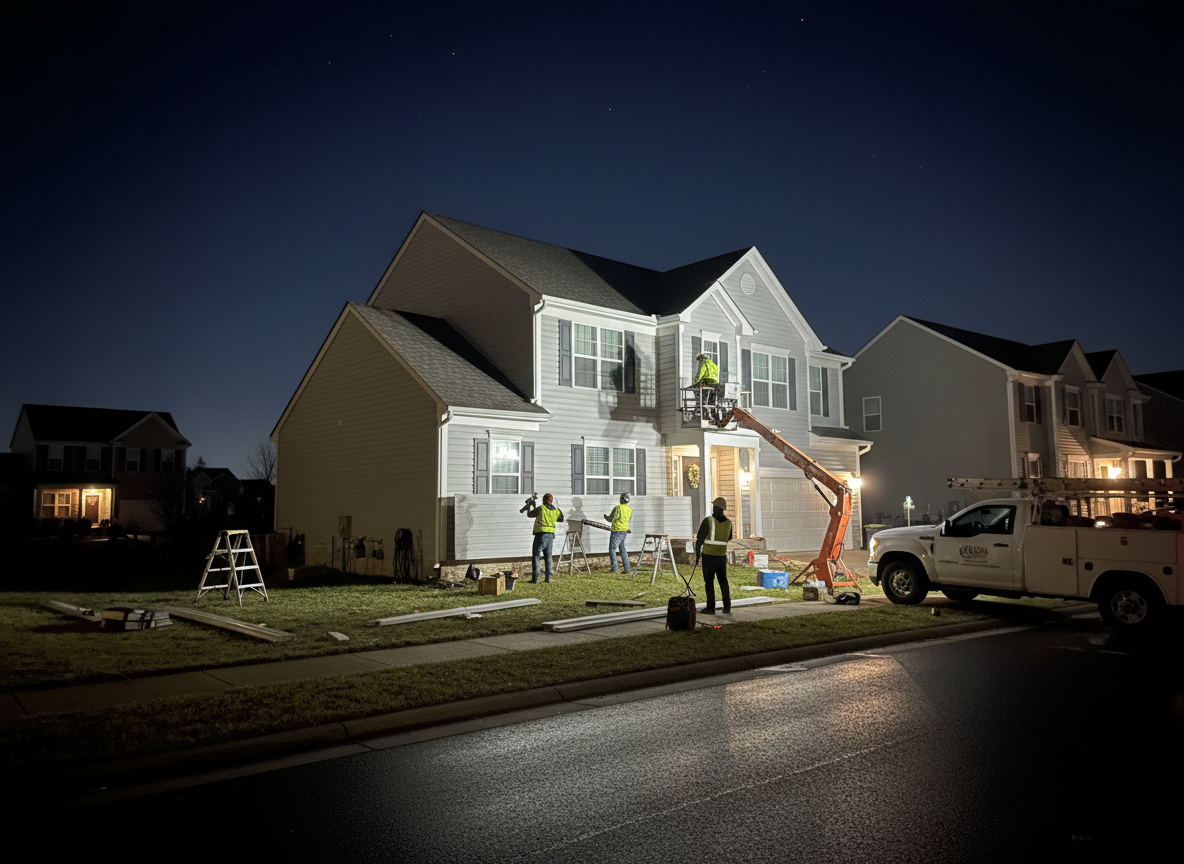
Anderson Township homes, many built between the 1950s and 1980s along streets like Beechmont Ave, often feature vinyl or aluminum siding over older sheathing that has seen decades of Ohio freeze-thaw cycles. When a panel cracks or a seam opens during a sudden storm, water reaches the wood framing quickly because the clay-heavy soils here hold moisture longer than surrounding counties. A 24/7 siding contractor must carry replacement stock that matches both the original profile and the current energy code requirements for the township, or the repair will fail inspection and create callbacks within a single season.
Night calls in Anderson Township usually involve wind-driven rain pushing under J-channel at gable ends or around replaced windows. The contractor arrives with portable lighting and a moisture meter to check sheathing before any new siding goes up, because hidden rot behind the surface is common on north-facing walls that never fully dry. Matching the existing fastener pattern prevents telegraphing through the new panels, and crews carry both standard and insulated backer options so the repair blends with the rest of the elevation without requiring a full re-side.
Emergency siding work here also means coordinating with the local power utility when lines run close to the work face, especially on two-story homes near the Little Miami River corridor. Crews secure tarps rated for the gusts that funnel through the valley and stage materials on the truck so the job can finish before daylight. Homeowners receive a written scope that lists every piece replaced and the exact sealant used, because future buyers in this market ask for that documentation during inspections.
Technician insight
In Anderson Township, the thing that catches most people out with 24/7 siding contractor is how the north-facing walls on 1970s homes along Beechmont Ave trap moisture behind the vinyl because the original house wrap has long since failed, so a simple panel swap turns into a full sheathing repair once you open it up.
Wind-Driven Leak on Beechmont Ave
A sudden storm lifted a corner panel on a two-story home near the address. Inspection showed water had reached the sheathing under the original aluminum siding. Crew replaced the damaged section and added new flashing at the gable overnight. The homeowner avoided interior drywall repairs that would have followed if the leak had continued.
How it works
- 1
Initial Call and Dispatch
Homeowner contacts the Beechmont Ave location; a technician is assigned immediately with the needed materials loaded.
- 2
On-Site Assessment
Moisture scan and photo documentation of the damage, including any affected sheathing or insulation behind the siding.
- 3
Scope and Quote
Written description of work and materials is provided before any cutting begins so the customer can approve the exact scope.
- 4
Repair or Replacement
Damaged sections are removed, sheathing is dried or replaced as needed, and new siding is installed with proper flashing and ventilation.
- 5
Final Walk-Through
Customer inspects the completed area; any touch-up sealant or color match is addressed before the crew leaves.
Pricing
Upfront quotes are given after inspection; price depends on extent of hidden damage and material match required.