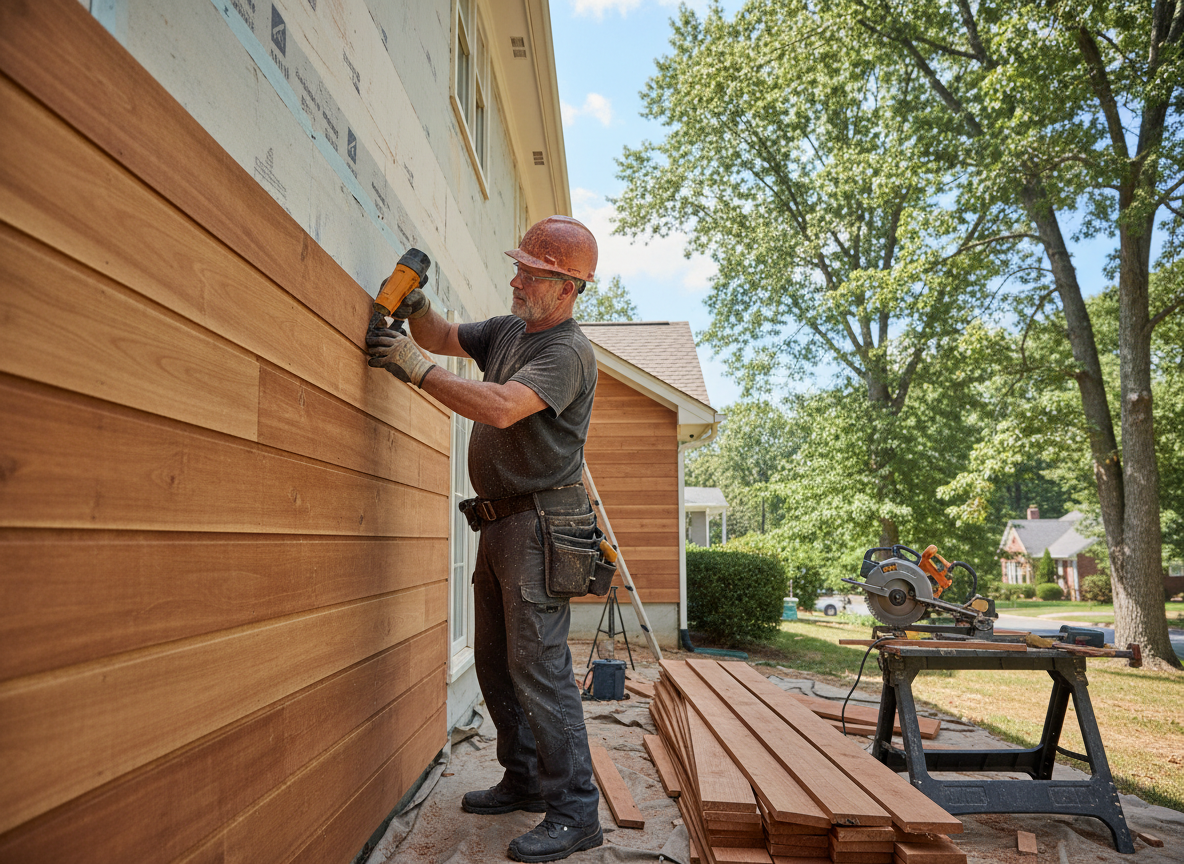
Wood siding on homes in Anderson Township often faces heavy moisture from Ohio River humidity combined with freeze-thaw cycles that cause boards to warp and cup over time. Older neighborhoods around Beechmont Avenue feature many 1960s and 1970s frame houses where original cedar or pine siding has reached the end of its natural lifespan, requiring targeted board replacement rather than full re-siding. Proper flashing at window and door penetrations becomes critical here because runoff from sloped lots common in the township funnels water directly against foundation lines.
Installation crews must account for the clay-heavy soils in Hamilton County that hold water against lower courses, accelerating rot at the base of walls. Homeowners frequently discover hidden damage only after removing layers of paint that have trapped moisture for decades. Spark Patch works from the address at 8310 Beechmont Ave and maintains 24/7 availability to respond when sudden wind-driven rain exposes failed joints during spring storms.
Selecting the right grade of primed pine or fiber-cement-backed wood alternatives depends on sun exposure on south-facing walls typical in Anderson Township subdivisions. Edge sealing every cut end and using stainless fasteners prevents the black streaking that appears after a few winters. Local building practices also require maintaining proper ventilation behind the siding to avoid trapping humidity inside wall cavities during humid summer months.
Technician insight
In Anderson Township, the thing that catches most people out with wood siding is how clay soil along many lots holds water against the lower three feet of wall, turning small paint failures into full board replacement jobs within two winters.
Hidden Rot on North Side
Homeowner noticed soft spots near the ground on a 1970s ranch in Anderson Township. We found extensive rot along the base where downspout discharge had soaked the clay soil for years. Replaced twelve feet of cedar siding, improved grading, and added a splash block. The wall has stayed dry through the next two seasons.
How it works
- 1
Site Assessment
Inspect existing wood siding condition, note rot locations, check flashing integrity, and evaluate drainage around the foundation in Anderson Township lots.
- 2
Material Selection
Choose appropriate wood species or treated alternatives matched to the home's age and exposure while confirming compatibility with local weather patterns.
- 3
Removal and Prep
Carefully remove damaged boards, treat underlying sheathing, install new housewrap where needed, and ensure all penetrations are properly flashed.
- 4
Installation
Hang new siding with correct overlaps, seal all joints and ends, and apply finish coats suited to Cincinnati-area UV and moisture exposure.
- 5
Final Walkthrough
Review completed work with the homeowner, confirm drainage paths remain clear, and provide maintenance guidance for ongoing performance.
Pricing
Upfront quotes provided after on-site assessment; final cost depends on extent of rot, access, and material choice.