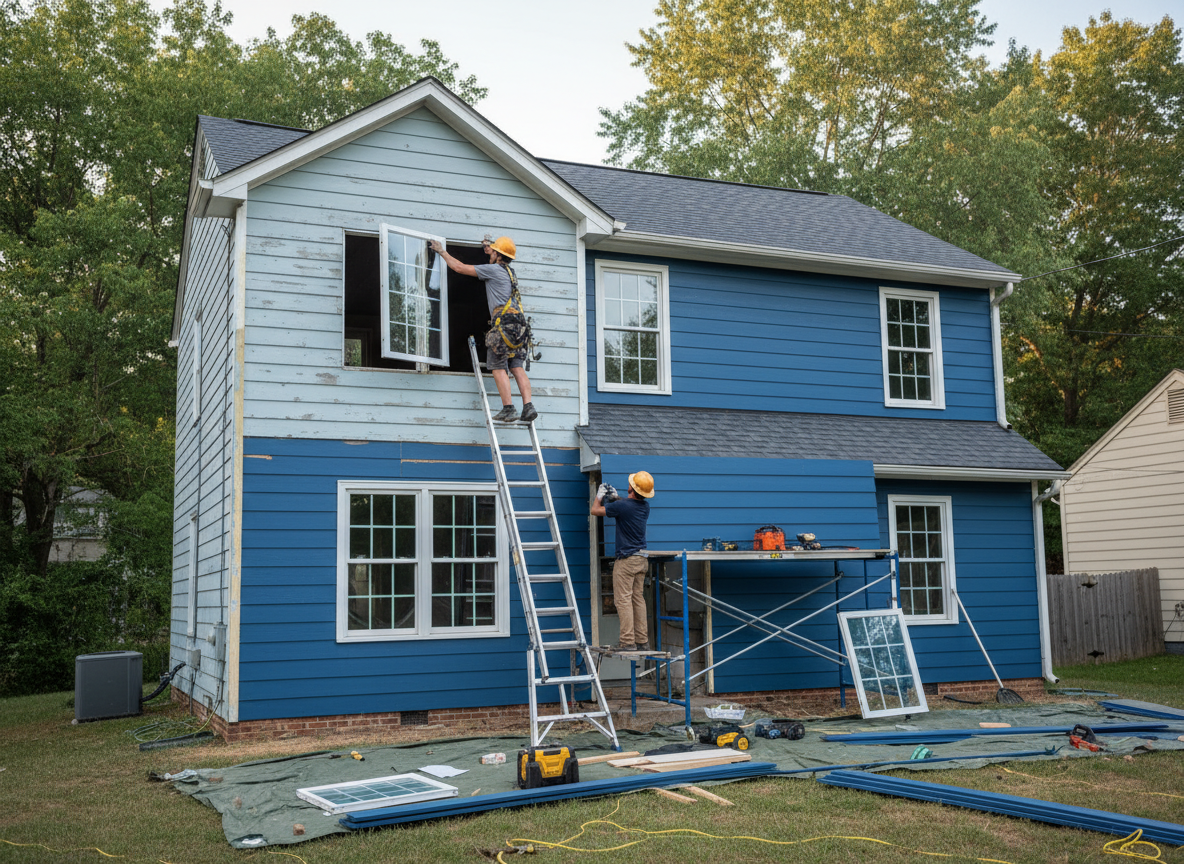
Anderson Township features a mix of mid-century homes and newer builds along routes like Beechmont Ave where siding often contends with Ohio valley humidity and freeze-thaw cycles. Window and siding contractors here routinely inspect for moisture intrusion behind vinyl or aluminum layers on older structures, especially where original wood sheathing meets modern replacement materials. Proper flashing at transitions and around window frames prevents water from migrating into the framing, a detail that becomes critical on sloped lots common in the township.
Contractors working from the 45255 zip code area see frequent calls for integrated window and siding projects because mismatched replacements can create visible seams and draft points. Attention to weep holes, housewrap seams, and caulk compatibility with local temperature swings keeps the assembly performing through summer storms and winter wind. Homeowners along Anderson Ferry Road or nearby side streets often discover that partial siding patches fail to match the original profile, requiring full elevation work to maintain curb appeal and weather resistance.
Code compliance in Hamilton County requires proper permits for structural changes around openings, and experienced crews verify nailing schedules and insulation values before closing up walls. Edge cases include homes with aluminum siding over asbestos layers that demand careful removal protocols. Spark Patch addresses these realities directly on every job originating from the Beechmont Ave base.
Technician insight
In Anderson Township, the thing that catches most people out with window and siding contractors is hidden moisture damage behind the siding on older homes near Beechmont Ave where the terrain funnels runoff toward foundations. Skipping a full tear-off and inspection often leads to callbacks when rot reaches the framing.
Siding and Window Refresh on a Split-Level
A homeowner on a sloped lot off Anderson Road noticed drafts around several windows and peeling paint on the lower siding. Inspection revealed water had entered at the transition between the original wood siding and a previous vinyl patch. The crew removed the affected sections, replaced damaged sheathing, installed new windows with integrated flashing, and matched the upper siding profile across the full elevation.
How it works
- 1
Site Assessment
Measure openings, evaluate existing siding condition, and note drainage patterns around the Anderson Township home.
- 2
Material Selection
Review options that match the home's age and neighborhood standards while confirming compatibility with local weather exposure.
- 3
Preparation and Removal
Protect landscaping, remove old materials, and address any discovered rot or sheathing issues before new installation.
- 4
Installation and Finishing
Install windows and siding with proper flashing, seal all joints, and complete trim work for a weathertight result.
- 5
Final Walkthrough
Review the completed work with the homeowner and explain maintenance points specific to Cincinnati-area conditions.
Pricing
Upfront quotes provided after on-site assessment; project scope and material choices determine final cost.