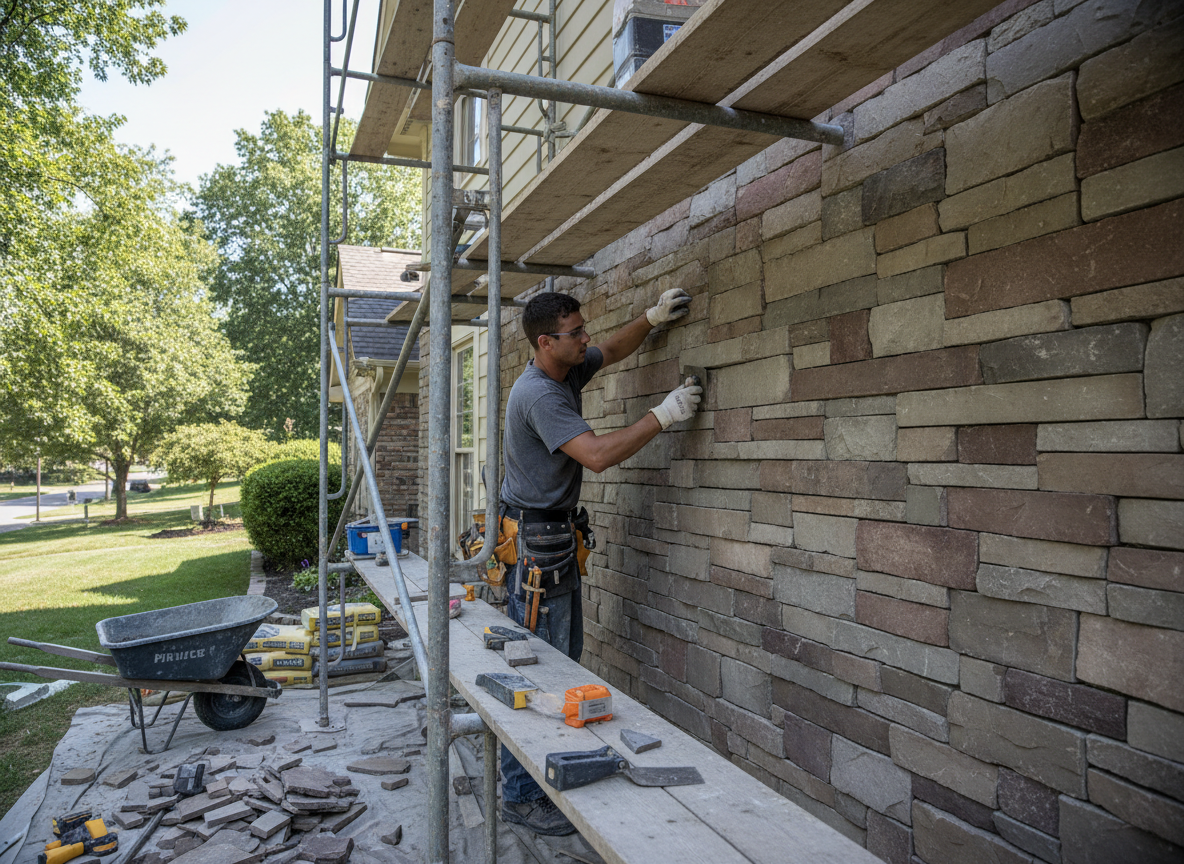
Stone veneer siding adds durable, low-maintenance appeal to homes throughout Anderson Township and nearby Cincinnati neighborhoods. The material performs well against Ohio's freeze-thaw cycles when installed over properly prepared sheathing and with adequate drainage details at the base. Older housing stock along Beechmont Ave often features uneven foundations that require extra attention to the weep screed and flashing to prevent moisture intrusion behind the veneer.
Proper substrate prep is critical in this area where clay-heavy soils retain water after heavy rains. We assess the existing wall assembly for rot or inadequate nailing surfaces before any new stone is applied. Edge cases like transitions at gable ends or around windows demand custom metal flashing to keep water moving away from the structure rather than pooling at the mortar joints.
Local building practices in Hamilton County call for specific attachment methods on wood-frame homes common in Anderson Township. Skipping the right lath or mortar additives leads to delamination over time, especially on north-facing walls that stay damp longer. Homeowners benefit from reviewing the full wall section with the crew before work starts so expectations match the actual conditions found on site.
Technician insight
In Anderson Township, the thing that catches most people out with stone veneer siding is how the clay soils along the hills near Beechmont Ave hold water against the foundation, pushing moisture up behind the veneer if the weep screed sits too low or gets covered during grading.
North Wall Repair on Anderson Township Home
Problem: Cracking and bulging stone on the north elevation after several winters. What we found: Inadequate flashing at the base allowed water to freeze behind the veneer on an older wood-frame house. What we did: Removed damaged sections, added proper drainage plane and new flashing, then reinstalled matching veneer. Outcome: Wall dried out and remained stable through the next freeze-thaw season.
How it works
- 1
Site Assessment
Inspect walls, foundation, and drainage around the Anderson Township property to identify substrate issues and water flow patterns.
- 2
Material and Detail Planning
Select stone profiles and flashing details suited to local freeze-thaw exposure and the home's existing siding transitions.
- 3
Preparation and Installation
Install weather-resistant barrier, lath, and mortar bed, then set the veneer with proper joint spacing for expansion.
- 4
Finishing and Cleanup
Tool joints, seal penetrations, and verify drainage at grade before final walkthrough with the homeowner.
Pricing
Upfront quotes provided after on-site review of wall conditions and access.