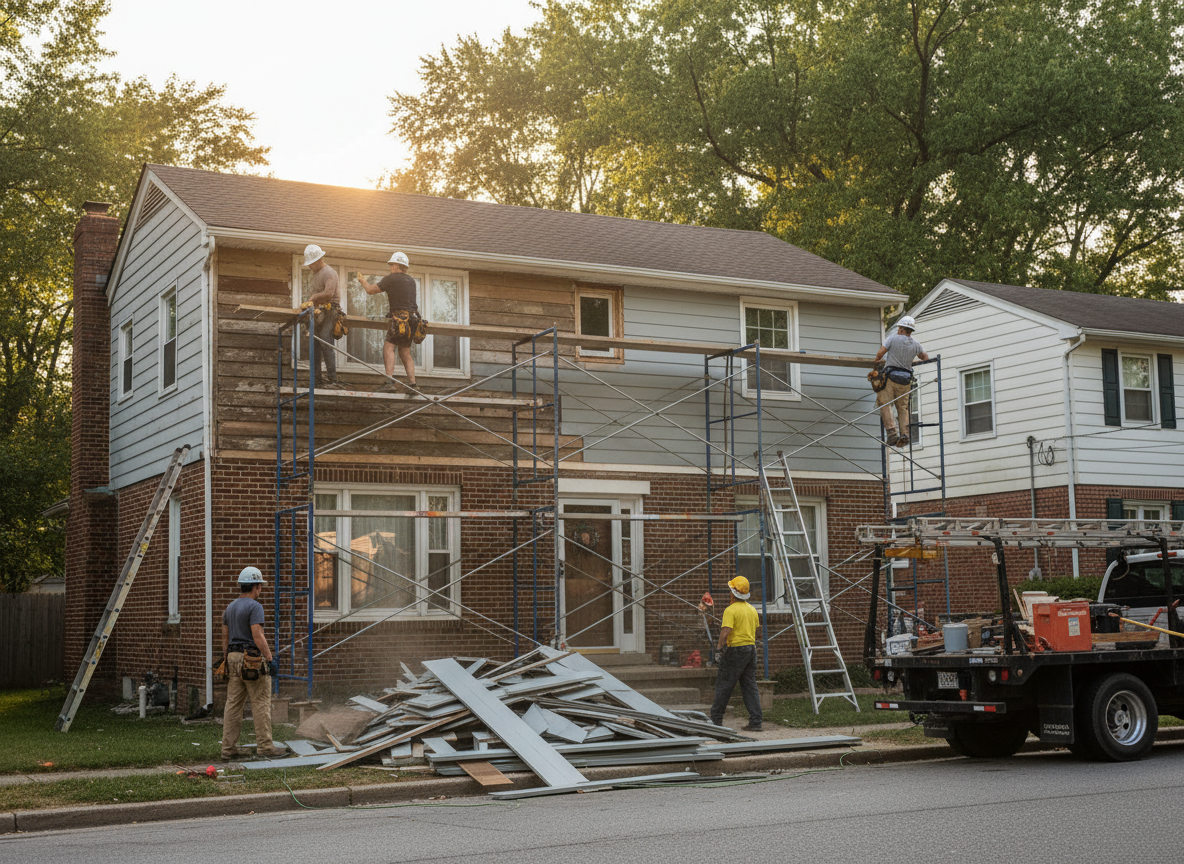
Anderson Township homes often feature original vinyl or aluminum siding installed decades ago that cracks under repeated freeze-thaw cycles common to Hamilton County winters. Replacement requires full removal down to the sheathing, inspection for hidden moisture damage from the area's rolling terrain, and installation of modern materials that handle both summer humidity and heavy snow loads. Spark Patch works from its Beechmont Ave base to coordinate with local permitting rules that govern exterior changes in unincorporated township sections.
Fiber cement and engineered wood options perform better than basic vinyl when homes sit near drainage swales or on slopes where water pools against lower courses. Proper house wrap, new flashing at windows, and attic ventilation upgrades prevent the ice damming that damages eaves in this region. Crews address the mix of ranch and two-story stock found throughout Anderson Township by staging materials to avoid disrupting driveways on narrower lots.
Edge cases include matching existing brick returns on 1970s builds and ensuring new siding clears soil grade to meet township drainage standards. Homeowners sometimes discover termite or carpenter ant activity once old layers come off, requiring coordination before new panels go up. Spark Patch schedules around the short spring and fall windows when temperatures stay suitable for caulking and nailing without expansion issues.
Technician insight
In Anderson Township, the thing that catches most people out with siding replacement contractors is how the steep slopes off Beechmont Ave funnel runoff against the lower third of homes, so any new install needs extended flashing and weep holes that standard bids often skip.
Siding Replacement on Sloped Lot
An Anderson Township ranch showed buckling vinyl along the rear elevation after several winters. Inspection revealed sheathing rot where water collected against the foundation on the downhill side. Crews removed the old siding, replaced damaged sections, added extra flashing, and installed fiber cement panels. The home now sheds moisture properly without ice buildup at the base.
How it works
- 1
Site Assessment
Measure elevations, note drainage patterns around the property, and identify any rot or insect damage visible once gutters are cleared.
- 2
Old Siding Removal
Strip existing layers to sheathing, dispose of debris, and protect landscaping on sloped Anderson Township lots.
- 3
Substrate Repair
Replace damaged sheathing, add house wrap, and install new flashing at all openings to handle local moisture cycles.
- 4
New Siding Installation
Hang chosen panels with correct nailing patterns, seal joints, and finish trim to match the home's architecture.
- 5
Final Walkthrough
Review every elevation, test door and window operation, and provide maintenance guidance for the new system.
Pricing
Upfront quotes after on-site inspection; cost driven by material choice, square footage, and any substrate repairs needed.