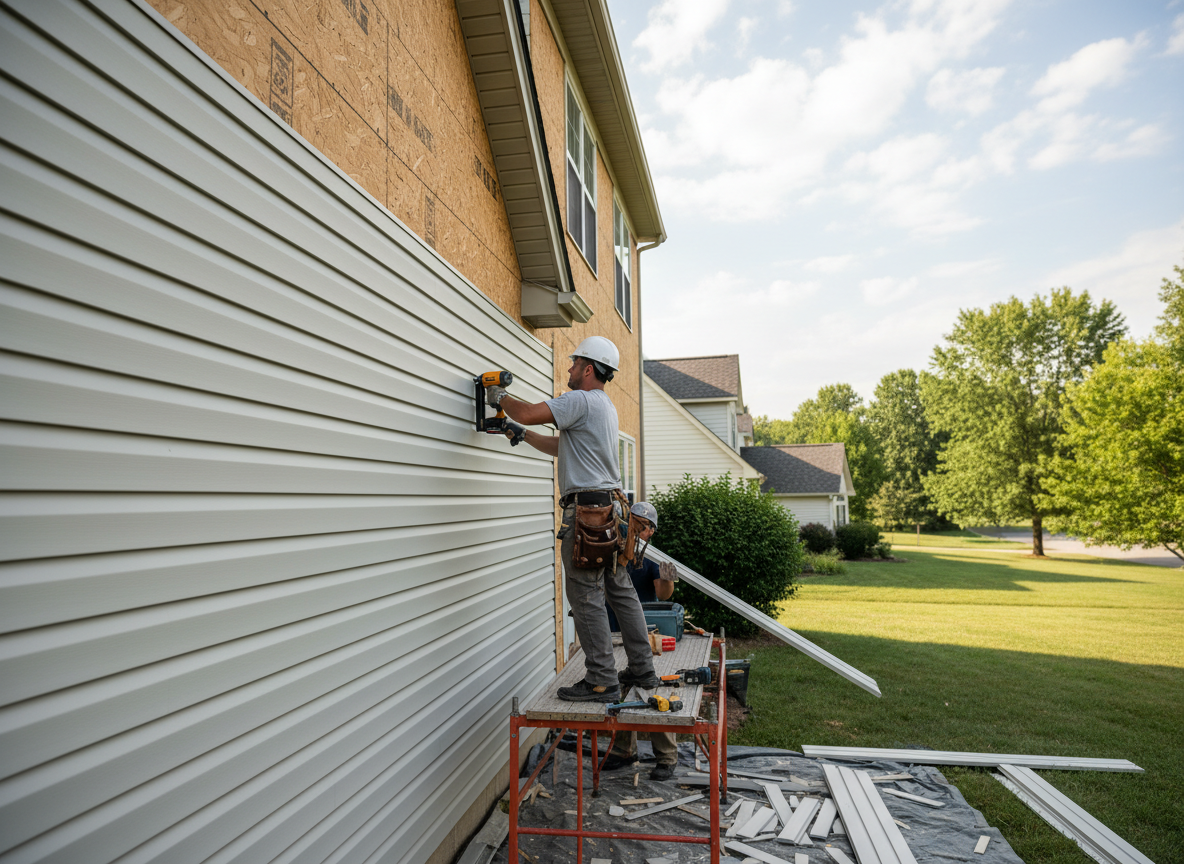
Anderson Township homes often feature older wood or aluminum siding that struggles with Cincinnati's humid summers and harsh winters. Freeze-thaw cycles around Beechmont Ave cause frequent expansion and contraction, leading to cracks and moisture intrusion behind panels. Proper underlayment and ventilation are essential to prevent rot in these 1960s-1980s builds common in the area. Siding installers must account for the county's soil movement on slopes, which shifts foundations and misaligns new panels if not addressed during prep.
Vinyl and fiber cement remain popular choices here because they resist the heavy rainfall and snow load typical in Hamilton County. Installers cut and fit around existing trim on ranch-style houses near Anderson Township's wooded lots, ensuring seams stay tight against wind-driven rain. Edge cases include matching profiles on additions built decades apart, where thermal bridging creates visible lines if insulation isn't integrated. Local permitting in Cincinnati requires specific nailing patterns and weep holes that vary by neighborhood elevation.
Terrain around 8310 Beechmont Ave means crews often work on split-level properties where drainage directs water toward lower siding courses. Skipping step flashing at roof intersections leads to leaks that homeowners notice only after interior damage appears. Experienced siding installers inspect for hidden termite trails in older sheathing before covering, a step that protects the structure long-term in this humid Ohio climate.
Technician insight
In Anderson Township, the thing that catches most people out with siding installers is how the rolling terrain near Beechmont Ave causes older homes to settle unevenly, so panels installed without extra flashing at the base end up trapping water that freezes and pushes them loose every winter.
Siding Install on Split-Level Home
Problem: Water was entering behind warped aluminum siding on a 1970s split-level near Anderson Township after heavy snowmelt. What we found: Poor original flashing at the foundation line allowed moisture to reach the sheathing on the downhill side. What we did: Removed damaged sections, added new step flashing and drainage plane, then installed fiber cement panels matched to the upper level. Outcome: Home stayed dry through the next freeze-thaw season with no further interior staining.
How it works
- 1
Site Assessment
Crew evaluates existing siding condition, measures square footage, and checks for moisture or structural issues on the Anderson Township property.
- 2
Material Selection
Homeowner reviews options suited to local weather, with recommendations for vinyl or fiber cement that handle Cincinnati freeze-thaw cycles.
- 3
Preparation and Removal
Old siding is stripped, underlayment inspected, and any damaged sheathing replaced while accounting for slope-related drainage patterns.
- 4
Installation
New siding is hung with proper flashing, ventilation gaps, and nailing to resist wind and moisture common in Hamilton County.
- 5
Final Inspection
Seams, trim, and caulking are checked for weather tightness before cleanup and homeowner walkthrough.
Pricing
Upfront quotes after on-site inspection; costs shift with material choice and home complexity.