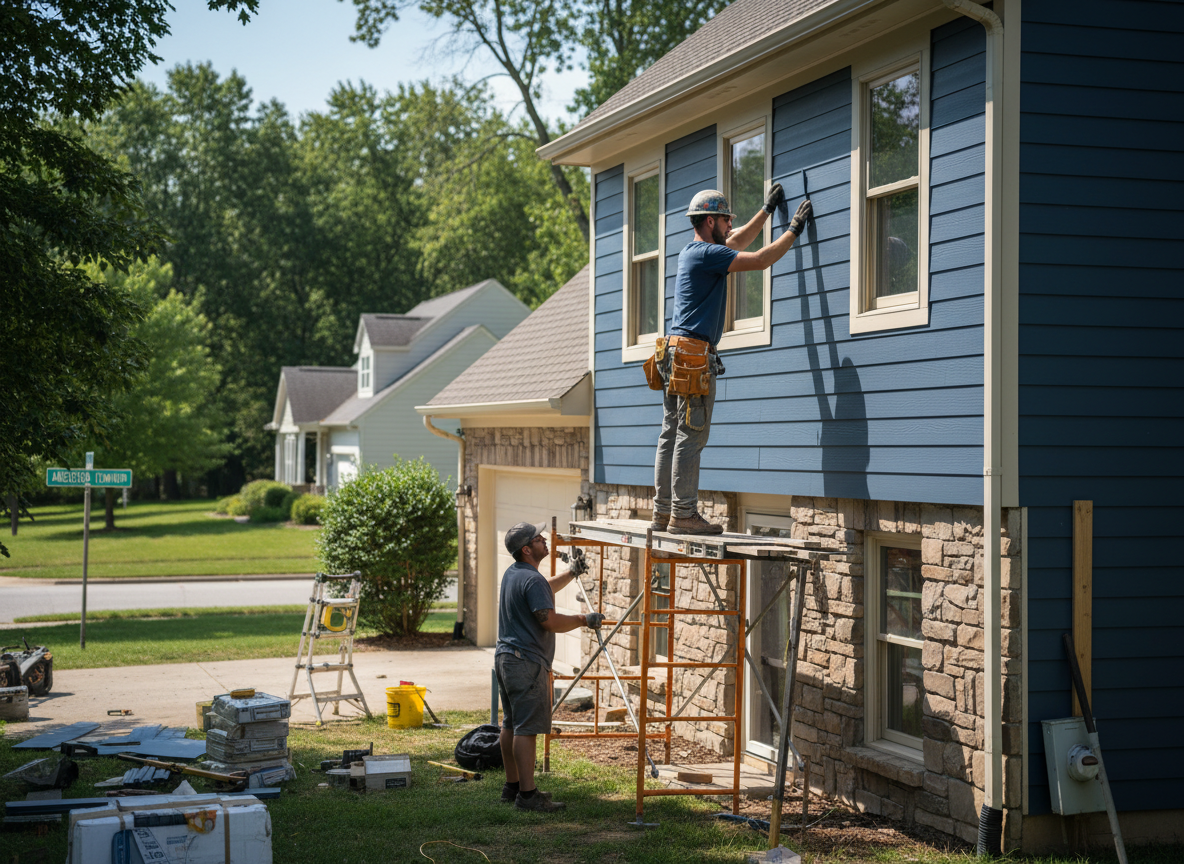
Anderson Township homes, many built between the 1960s and 1980s in neighborhoods like Mount Washington and surrounding parts of Hamilton County, often feature original aluminum or early vinyl siding that has taken repeated hits from Cincinnati's freeze-thaw winters. When temperatures swing from below freezing to above 40 degrees within days, seams open and fasteners back out, allowing water to reach sheathing. A siding contractor in my area sees this pattern on nearly every call along Beechmont Avenue corridors where wind-driven rain off the Ohio River valley accelerates wear on south and west exposures.
Local building practices in Anderson Township require proper housewrap integration and flashing at all penetrations, especially around the many two-story additions added over the decades. Skipping step flashing or using short nails into aging OSB leads to callbacks once spring rains hit. We routinely pull back sections on these homes to check for rot that started at the water table line where soil holds moisture against the foundation skirt board.
Terrain plays a role too. Sloped lots common in the township direct runoff toward lower courses of siding, so we install kick-out flashing and extend starter strips farther than flat-lot jobs require. This prevents the capillary wicking that shows up first on the downhill side of homes near the Little Miami River tributaries.
Technician insight
In Anderson Township the thing that catches most people out with siding contractors in my area is how many 1970s split-levels have OSB sheathing that has already softened along the bottom plate from years of snow melt pooling against the foundation. You pull one piece and the whole course needs attention.
Mount Washington Split-Level Repair
Homeowner noticed water stains inside a bedroom wall after a January thaw. We found failed J-channel and rotted OSB on the downhill side where runoff collected. Replaced the affected sheathing, added proper kick-out flashing, and reinstalled siding to match the rest of the elevation. No further leaks reported after the next heavy rain.
How it works
- 1
Site Assessment
Walk the full exterior, note existing siding type, substrate condition, and water entry points specific to the lot slope.
- 2
Material Selection
Match profile and thickness to the home's age while choosing colors that hold up under Anderson Township UV exposure.
- 3
Removal and Prep
Strip damaged sections, inspect and replace sheathing where needed, then apply new weather barrier with taped seams.
- 4
Installation and Trim
Install new siding with correct nailing patterns, add matching trim, and seal all transitions against local wind-driven rain.
- 5
Final Walkthrough
Review every elevation with the homeowner and explain maintenance points for the freeze-thaw cycle.
Pricing
Upfront quotes after on-site inspection; final price depends on square footage, substrate repairs, and chosen material grade.