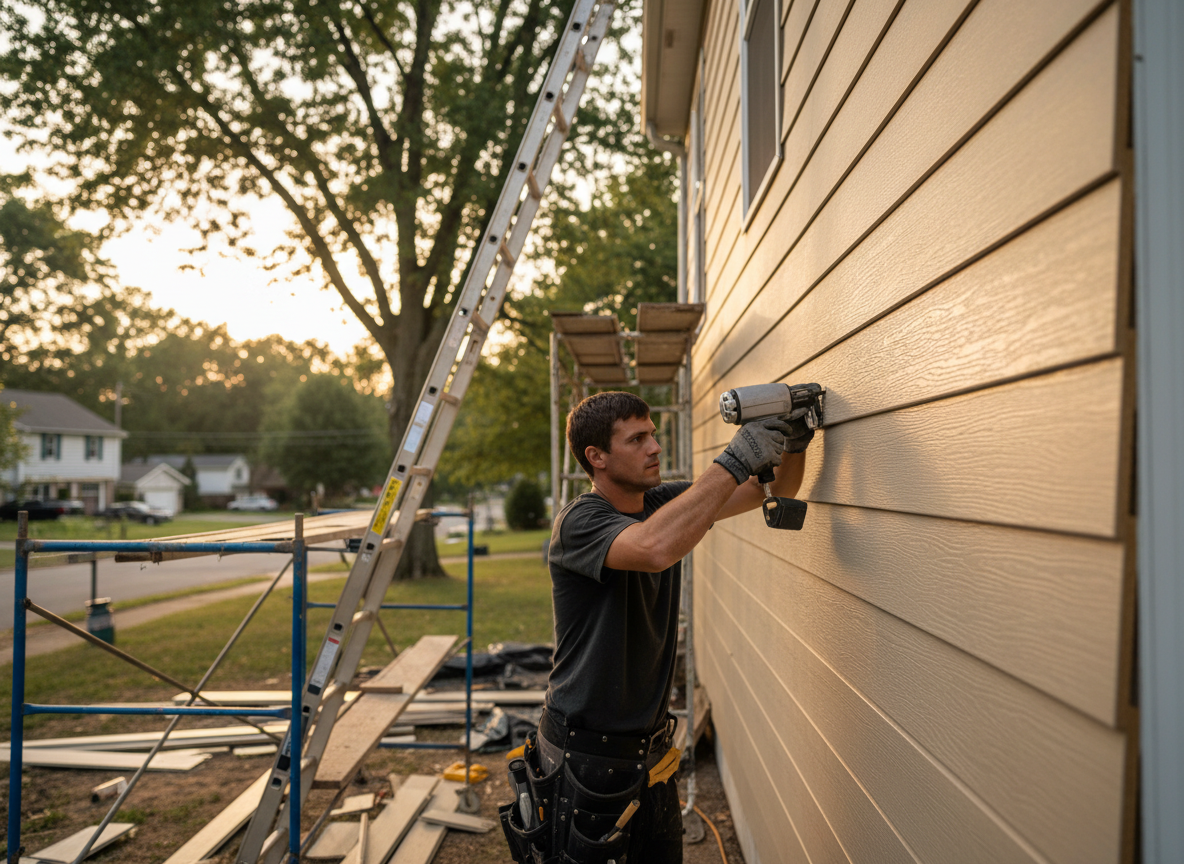
Plastic siding, commonly called vinyl, performs differently on Anderson Township homes built from the 1960s through 1990s where original wood or aluminum often meets newer vinyl additions. The material expands and contracts with Hamilton County temperature swings, so installers must leave proper gaps at trim and corners or panels will buckle after the first hard freeze. Beechmont Avenue properties and those near the Little Miami River see extra moisture that accelerates fading on south-facing walls, requiring color-matched replacements rather than full panel swaps when possible.
Edge cases appear on sloped lots common in Anderson Township where drainage directs water behind the siding at the foundation line. Without weep holes or proper starter strip placement, rot develops in the sheathing before homeowners notice. Local building practices favor housewrap integration during any large repair to meet current Hamilton County energy codes, and skipping this step creates callbacks when insulation gets wet. Matching existing profiles from older brands like Alside or CertainTeed often means sourcing discontinued pieces or custom ordering to avoid visible seams.
Homeowners frequently attempt DIY patches with big-box panels that differ in thickness and gloss, creating long-term visual mismatch after one summer of UV exposure. Professional crews measure the actual reveal height on each wall because Anderson Township additions from different decades rarely align, and forcing a standard 4-inch exposure distorts the entire elevation. Proper nailing through the slots without pinning the vinyl remains critical so the siding can move freely during winter contraction.
Technician insight
In Anderson Township, the thing that catches most people out with plastic siding is the way freeze-thaw cycles along the river hills push water behind panels on north-facing walls if the starter strip sits too close to grade. Homeowners often caulk the bottom edge thinking it helps, but that traps moisture and rots the sill plate before spring.
Buckled Panels After Winter
Panels on a 1980s split-level near Beechmont Ave had buckled after repeated freeze-thaw cycles. We found the original install had left no expansion room at the corners. We removed the affected courses, added proper gaps, and reinstalled matching vinyl so the wall could move freely without future distortion.
How it works
- 1
On-Site Assessment
Measure walls, check for underlying moisture, and identify original siding profiles on the specific Anderson Township property.
- 2
Material Matching
Source vinyl that aligns with existing thickness, color, and reveal height to avoid patchwork appearance after installation.
- 3
Preparation And Flashing
Remove damaged sections, inspect sheathing, add housewrap where needed, and install new starter strips and trim.
- 4
Installation And Final Check
Hang panels with correct expansion gaps, secure trim, and verify drainage paths on sloped lots before cleanup.
Pricing
Upfront quotes based on wall access, material matching needs, and any sheathing repairs discovered during inspection.