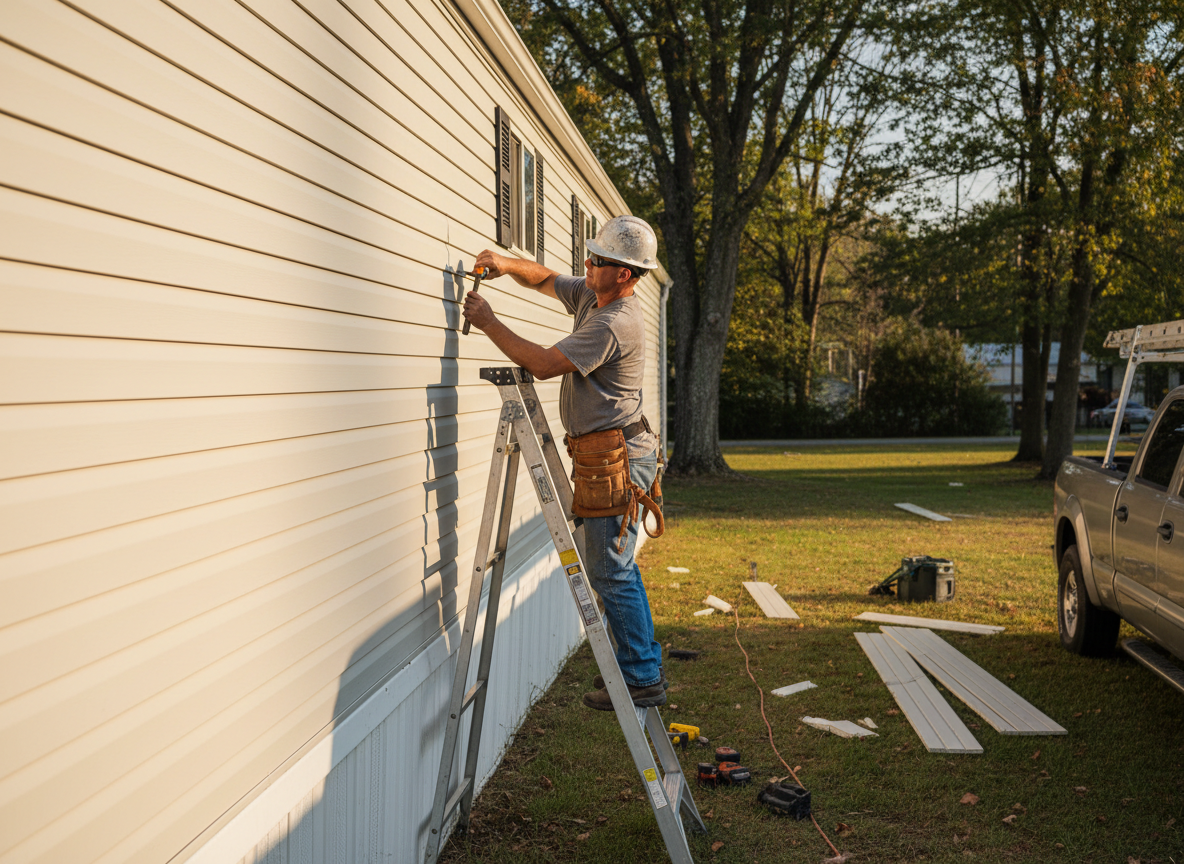
Mobile home siding in Anderson Township faces constant stress from Ohio's freeze-thaw cycles and heavy spring rains. Older units along Beechmont Avenue and in the Forest Hills area often have original aluminum or thin vinyl that buckles when moisture gets behind the panels. Proper removal requires checking the sheathing for rot, especially where the siding meets the skirting, because trapped water from roof runoff accelerates decay in these elevated structures.
Vinyl is the most common replacement material here because it handles temperature swings better than aluminum and resists the fading seen on south-facing walls exposed to summer sun. Installation on mobile homes demands extra attention to the J-channel and trim around windows and doors to prevent wind-driven rain from entering during winter storms. Skipping the house wrap step leads to callbacks within two seasons when insulation gets wet and loses effectiveness.
Homeowners sometimes attempt to overlay new panels over existing damaged siding to save time, but this traps moisture and voids any remaining structural integrity in the walls. Spark Patch always pulls the old material, inspects the framing, and replaces any compromised sections before hanging new siding. This approach keeps the job compliant with Hamilton County expectations for exterior alterations on manufactured homes.
Terrain around Anderson Township properties often includes slight slopes that direct water toward the home's base. Addressing grading before siding work prevents future water intrusion at the bottom track, a detail that separates quick cosmetic fixes from durable repairs that last through multiple winters.
Technician insight
In Anderson Township, the thing that catches most people out with mobile home siding is how quickly water gets trapped behind the skirting on lots with poor drainage near the Little Miami River floodplain. Homeowners often overlook the bottom track until rot reaches the floor joists, turning a siding job into a bigger structural repair.
Buckled Panels on a Forest Hills Mobile Home
Panels on the north wall had pulled away after repeated freeze-thaw cycles. We found saturated insulation and rotted sheathing along the base where runoff pooled against the skirting. After replacing the damaged sections and adding proper flashing, the new vinyl siding stayed flat through the next winter with no further movement.
How it works
- 1
Initial Assessment
Inspect the existing siding, sheathing, and moisture barriers on site at the Anderson Township address.
- 2
Material Selection
Choose vinyl or fiber cement panels suited to local freeze-thaw exposure and match existing trim profiles.
- 3
Preparation and Removal
Remove old siding, repair any rotted sections, and install new house wrap where needed.
- 4
Installation
Hang new siding with proper fastening, flashing, and ventilation to handle Ohio weather cycles.
- 5
Final Walkthrough
Check all seams, trim, and drainage details before completing the project.
Pricing
Mobile home siding projects are quoted after on-site inspection because panel type, wall height, and extent of underlying repairs vary widely.