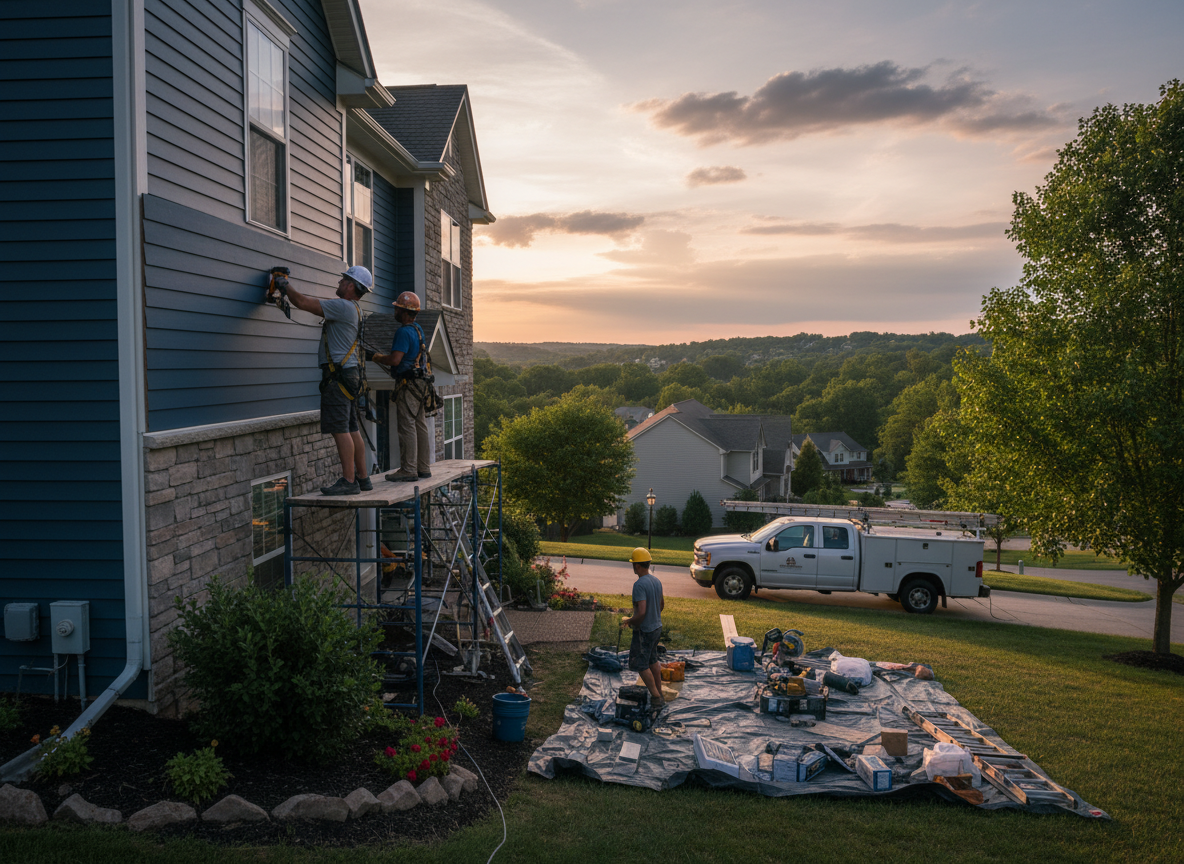
Anderson Township homes often feature mid-century construction with original wood or early vinyl siding that has endured decades of Ohio weather. Freeze-thaw cycles common along the Little Miami River corridor cause repeated expansion and contraction, loosening fasteners and allowing moisture behind panels. Proper underlayment and flashing details at window and door openings become critical to prevent rot in the sheathing, especially on ranch-style houses prevalent near Beechmont Avenue and Salem Road.
Choosing materials for this area means balancing cost against performance in humid summers and heavy winter precipitation. Fiber cement boards resist insect damage better than wood but require precise gapping to accommodate temperature swings, while insulated vinyl options add energy efficiency without altering the look of established neighborhoods. Crews must also account for the hilly terrain that creates uneven drainage patterns around foundations, directing runoff toward lower courses of siding on many properties.
Code requirements in Hamilton County call for specific nailing schedules and vapor barrier placement that vary by wall assembly. Skipping these steps during replacement on older homes frequently triggers inspection failures and future callbacks. Edge cases include matching profiles on additions built decades apart and addressing lead paint layers when stripping original siding from 1950s and 1960s structures scattered throughout the township.
Technician insight
In Anderson Township, the thing that catches most people out with home siding contractors is the hidden rot behind original siding on 1960s homes near Beechmont Ave where poor original flashing meets the steep slopes that funnel winter melt right into the wall cavity.
Siding Refresh on a Salem Road Ranch
Homeowner noticed buckling panels after a harsh winter. Inspection revealed water intrusion at the rear elevation due to settled grading. Crew removed damaged sections, corrected the slope with added French drain, and reinstalled insulated vinyl with upgraded flashing. The home now sheds water properly and matches the rest of the street.
How it works
- 1
Site Assessment
Measure elevations, inspect substrate condition, and note drainage issues around the foundation.
- 2
Material Selection
Review siding options suited to local freeze-thaw exposure and neighborhood aesthetics.
- 3
Preparation and Removal
Strip existing layers, repair sheathing, and install new housewrap with taped seams.
- 4
Installation
Apply new siding with correct fasteners, flashing, and expansion gaps for Ohio temperature swings.
- 5
Final Inspection
Check all penetrations, clean the site, and confirm drainage directs water away from the base.
Pricing
Upfront quotes based on material choice and home complexity; no hidden fees.