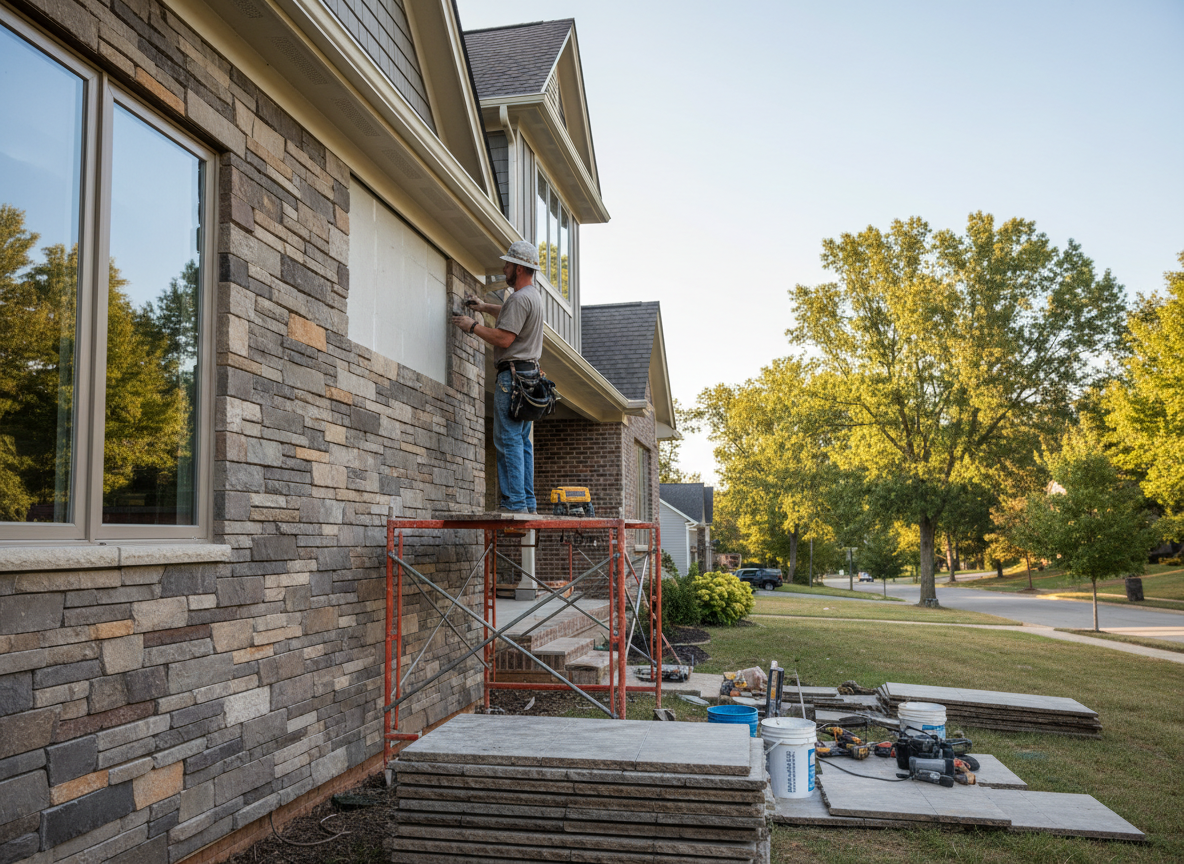
Fake stone siding, also called manufactured stone veneer, attaches to existing walls with a mortar bed over a weather-resistant barrier and metal lath. In Anderson Township, where many homes date from the 1960s and 1970s and sit on sloped lots near the Little Miami River corridor, proper drainage planes and weep holes prevent water from pooling behind the veneer during spring thaws. Installers must account for the expansion joints every 20 feet because winter temperature swings cause the substrate to move differently than the stone.
Edge cases appear when homeowners want to cover original brick or wood on split-level houses common along Beechmont Avenue. The added weight requires checking ledger board integrity and sometimes sistering joists. Code notes in Hamilton County call for a minimum 4-inch clearance above grade to avoid splash-back, and any electrical or plumbing penetrations need flashing boots rated for the local wind-driven rain loads.
Seasonal timing matters. Summer installs allow mortar to cure before fall rains, while winter work demands heated enclosures so the mix does not freeze. Spark Patch crews based at 8310 Beechmont Ave carry extra backer rods and color-matched caulk for the inevitable trim transitions around Anderson Township windows that have settled over decades.
Technician insight
In Anderson Township, the thing that catches most people out with fake stone siding is skipping the drainage plane behind the veneer on older split-level homes near Beechmont Ave. Once winter temperatures drop and the ground stays saturated, water finds the smallest gap and pushes the stone away from the wall within two seasons.
Split-Level Home on Beechmont Ave
Water was seeping behind loose fake stone on the lower level of a 1970s split-level. We found missing flashing at the ledger and no weep holes. We removed the failed sections, added proper drainage plane and new flashing, then reinstalled matching veneer. The homeowner now has dry walls and consistent stone appearance.
How it works
- 1
Site Assessment
Measure walls, check substrate condition, and note drainage paths on the specific lot in Anderson Township.
- 2
Prep and Flashing
Install weather barrier, metal lath, and all necessary flashing around openings and grade lines.
- 3
Veneer Application
Apply mortar bed and set individual stones, maintaining consistent joints and weep holes.
- 4
Finishing and Cleanup
Tool joints, apply sealant where required, and remove debris from the property.
Pricing
Pricing varies with square footage, stone profile, site access on sloped Anderson Township lots, and whether substrate repairs are needed; request an on-site quote.