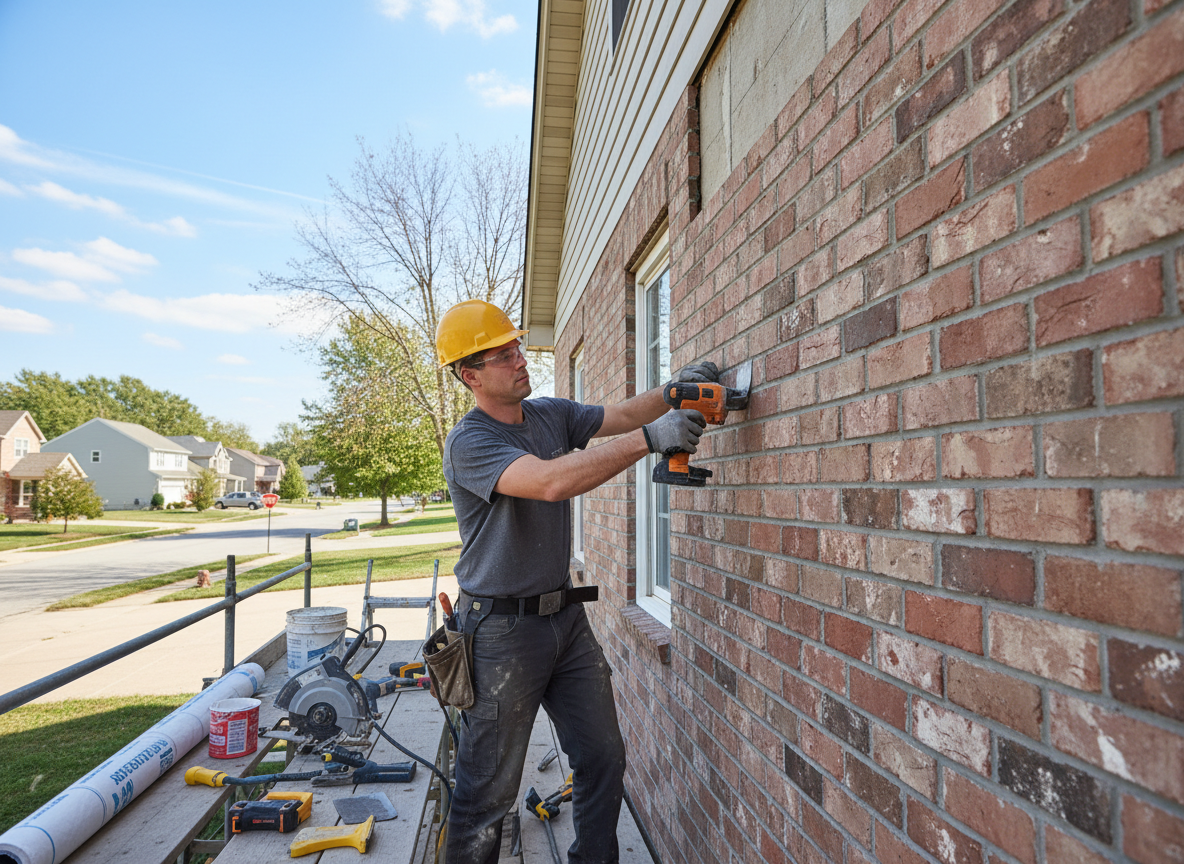
Anderson Township homes built from the 1950s onward often feature original brick that cracks from repeated freeze-thaw cycles common along the Ohio River valley. Fake brick siding panels offer a lighter-weight alternative that mimics the look while allowing better ventilation behind the facade. Proper furring strips and moisture barriers become critical on these properties because many lots sit on sloped terrain that directs water toward foundations.
Edge cases arise when matching existing brick colors on additions or when older sheathing shows rot from past leaks. Panels must be cut precisely around Anderson Township's common gable vents and window trim to maintain code-required clearances. Homeowners sometimes overlook the need for expansion joints in long runs, which leads to buckling during summer humidity spikes.
Installation requires checking for proper nailing into studs rather than just sheathing, especially on 1960s ranch styles prevalent in neighborhoods near Beechmont Avenue. Skipping this step creates future callbacks when wind-driven rain penetrates seams. Spark Patch crews at 8310 Beechmont Ave keep 24/7 availability for emergency repairs after storms that expose these weaknesses.
Technician insight
In Anderson Township, the thing that catches most people out with fake brick siding is water trapped behind panels on sloped lots near the river. Older homes here often lack modern drainage planes, so skipping furring strips turns a quick refresh into rot repair six months later.
Mount Washington Addition Siding Refresh
A 1968 ranch in Anderson Township showed buckling panels along the rear addition after a harsh winter. We found missing flashing at the roofline letting meltwater behind the facade. New furring, updated housewrap, and properly gapped fake brick panels restored the look and stopped the leaks.
How it works
- 1
Site Assessment
Inspect existing siding, sheathing, and drainage around the Anderson Township home to identify moisture issues before any panels go up.
- 2
Material Selection
Choose panel profiles and colors that match surrounding brick while accounting for local sun exposure and winter salt exposure.
- 3
Preparation and Flashing
Install furring, housewrap, and new flashing at windows and doors to handle Ohio freeze-thaw movement.
- 4
Panel Installation
Secure panels with proper fasteners and expansion allowances, then seal joints for wind-driven rain resistance.
- 5
Final Inspection
Check all seams, trim, and drainage paths to confirm the system performs through Cincinnati-area winters.
Pricing
Pricing depends on square footage, existing damage, and panel style chosen.