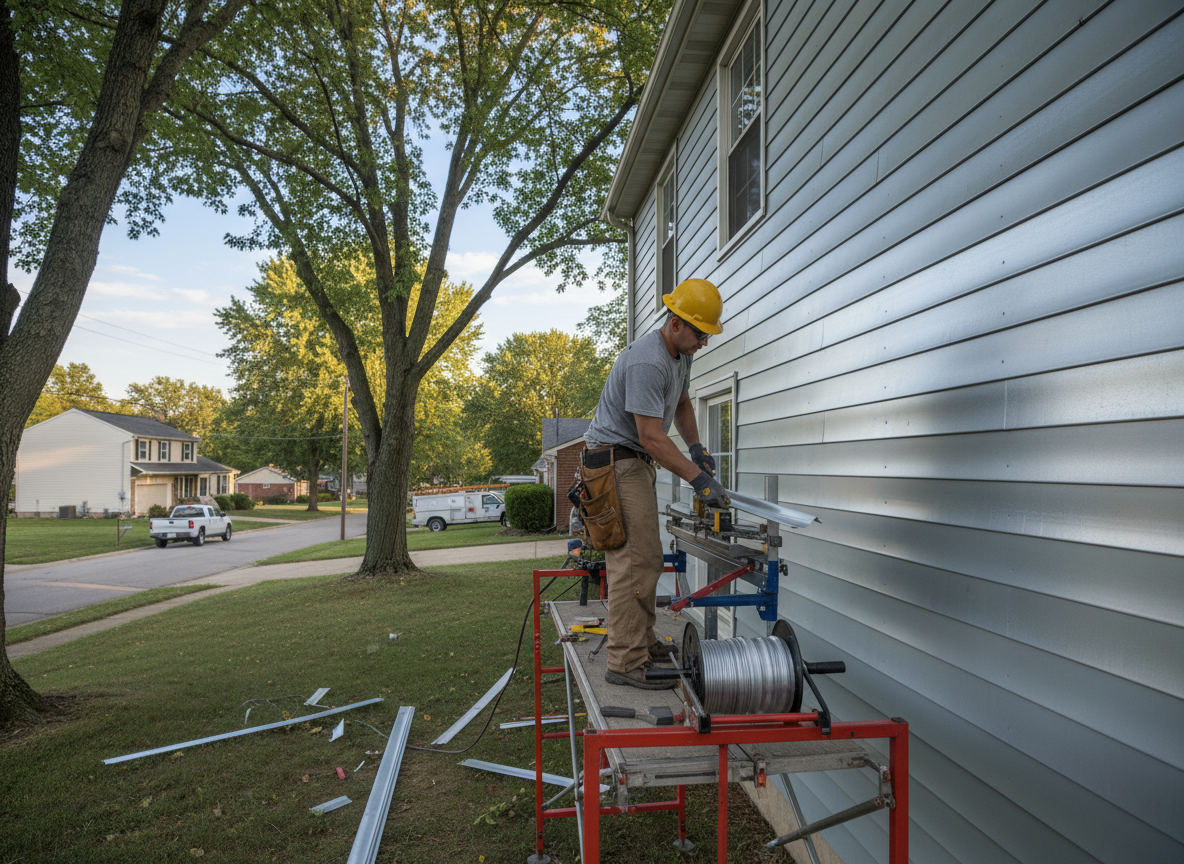
Aluminum siding on Anderson Township homes often dates to the 1960s through 1980s when many ranch and split-level houses were built along the hills near the Little Miami River. The material expands and contracts with the wide temperature swings common in Hamilton County, so installers must leave proper gaps at joints and use the correct nailing schedule to avoid buckling. We check for hidden rot behind panels where water has wicked up from the ground on sloped lots common in the township.
Homeowners sometimes try to paint aluminum siding themselves, but the factory finish and the way Ohio winters trap moisture under layers lead to peeling within two seasons. When we replace sections we match the original profile so the new panels sit flush with existing courses rather than creating a noticeable ridge. Edge trim around windows and doors needs extra attention because wind-driven rain funnels along the valley lines that run through many Anderson properties.
We remove old insulation board if it has absorbed water and replace it with a modern moisture barrier before hanging new panels. This step prevents the telegraphing of seams that shows up after the first hard freeze. Fastener choice matters on the steeper grades found off Beechmont and Salem Road, where soil movement can shift the bottom course over time.
Code requirements in Hamilton County call for proper flashing at roof-wall intersections, and we verify these details on every job to keep water out of the wall cavity. Aluminum also needs to be kept clear of direct soil contact on walk-out basements, a detail that matters on many lower-level homes in the township.
Technician insight
In Anderson Township the thing that catches most people out with aluminum siding is how the steep lots off Salem Road let water sit against the bottom course during spring thaws, loosening the starter strip on homes built before modern drainage details were common.
Buckled Panels After Winter
A homeowner in Anderson Township noticed several aluminum panels bowing outward after a hard freeze. We found the original insulation had absorbed water from poor grading on the sloped lot. We replaced the wet board, added a new moisture barrier, and reinstalled matching panels with corrected expansion gaps so the wall now sheds water properly.
How it works
- 1
Site Assessment
We inspect the existing aluminum panels, substrate, and flashing on site in Anderson Township to note damage patterns caused by local freeze-thaw cycles.
- 2
Material Selection
We match the original profile and color using current stock that meets current wind-load standards for the area.
- 3
Removal and Prep
Old panels and any compromised insulation are removed, rotted wood is replaced, and a new moisture barrier is installed.
- 4
Installation
New aluminum siding is hung with correct expansion gaps and sealed trim, followed by a final walkthrough with the homeowner.
Pricing
Upfront quotes provided after on-site inspection; final price depends on square footage, substrate condition, and trim details.